The Olympic Blueprint: How Storytelling, Emotion, and Brand Alignment Turned Viewers Into Believers and What College Athletics Can Learn From It
- Regan Jones
- 6 days ago
- 4 min read

Every two years, the Olympics reminds me of something powerful, sports content isn’t just about competition. It’s about connection. NBC, Team USA, and major advertisers didn’t simply broadcast events, they built an emotional universe where viewers felt invested in athletes they’d never met, sports they’d never watched, and brands they’d never considered. I now have a vested interest in Ilia Malinin and his comeback arc, in Alysa Liu and the way she represents joy, empowerment, and strength as a granddaughter of an immigrant, and in Mikaela Shiffrin, whose journey through grief, pressure, and resilience made every run feel personal. These athletes became more than names on a roster, they became stories we carried with us and people we rooted for as if we’d known them for years.
The Olympics are a masterclass in storytelling, alignment, and emotional resonance by turning strangers into emotional touch points and moments into memories. The same formula that college athletics can use to elevate their programs, their athletes, and their partners.
1. NBC’s Secret Weapon: Story First, Sport Second

NBC has perfected the art of the “Olympic Feature.” Before you ever see an athlete compete, you meet them, their childhood, their sacrifices, their heartbreak, their comeback.
These stories do three things:
• Humanize the athlete
• Create emotional stakes
• Make the viewer feel like part of the journey
By the time the event airs, you’re not watching a race, you’re watching their race. Their dream. Their redemption arc.
2. Advertisers Leaned Into Identity, Not Just Impressions
The best Olympic ads didn’t just show products. They showed values:
• Family
• Grit
• Patriotism
• Perseverance
• Joy
• Representation
Brands like Visa, Nike, Coca‑Cola, and Toyota didn’t say “buy this.” They said, “We believe in the same things you do.” They aligned themselves with the athlete’s story, not the scoreboard. That’s why the ads felt emotional instead of transactional.
This is the same shift happening in NIL:
Brands don’t want influencers. They want identities they can align with.

3. Team USA Made America Feel Like a Team Again
One of the most powerful moments of any Olympics is the national anthem with athletes singing with pride, tears in their eyes, flags draped over shoulders. Those moments do something content rarely achieves, they make viewers feel like they belong to something bigger.
Team USA leaned into a collective identity:
• Behind‑the‑scenes camaraderie
• Emotional reactions
• Rituals and traditions
• The weight of representing a nation
4. Why This Worked: The Psychology Behind Olympic Storytelling
Olympic content resonates so deeply because it taps into emotional triggers that are universal.
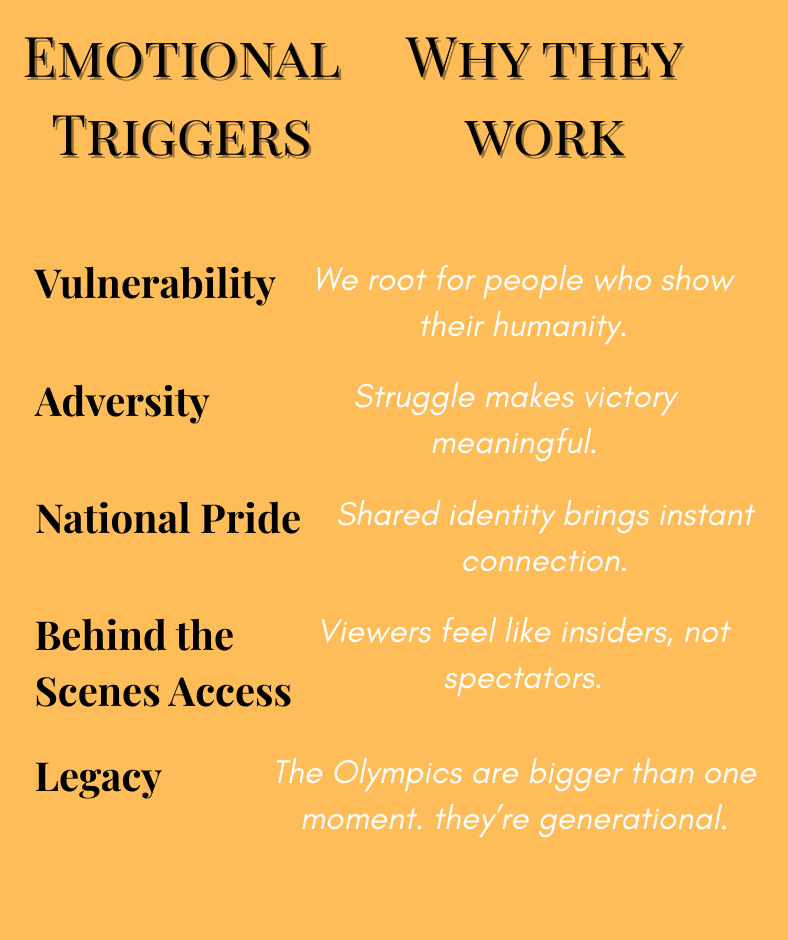
5. The Bridge to College Athletics: Why This Blueprint Matters Now
College athletics is the closest thing America has to the Olympics on a year‑round basis.
Every program has:
• Athletes with compelling backstories
• Traditions that define identity
• Emotional highs and lows
• Communities that rally behind them
• Brands eager to align with authentic stories
But most schools still rely on highlight reels, hype videos, and transactional NIL posts. Those have their place, but they don’t build connection. What builds connection is story.
6. How College Programs Can Apply the Olympic Formula

A. Lead With Story, Not Stats
Fans don’t fall in love with numbers.
They fall in love with:
• The walk‑on who became a starter
• The senior who came back from injury
• The international athlete who left home at 16
• The freshman who carries the weight of their family’s dreams
Every athlete has a story. Most programs never tell it.
B. Build the “Triangle of Alignment”

Olympic advertisers mastered this where content performs every time, college athletics can too.
C. Show the Rituals, Not Just the Results
Fans want to see scenes that make viewers feel like insiders::
• Pregame traditions
• Locker room moments
• Team meals
• Travel days
• Recovery routines
• The anthem
• The emotion
D. Treat NIL Like Brand Development, Not Production
I don’t just create content, I create clarity around who an athlete is and why their story matters. Olympic content proves that identity drives value. College athletes need the same intentionality.
E. Make Fans Feel Like They’re Part of the Journey
Bring the casual viewers inside and make them loyal fans:

• Using long‑form storytelling
• Giving athletes space to speak in their own voice
• Showing the emotional stakes
• Highlighting the human moments
• Creating episodic content that builds over time
7. The Takeaway: The Olympics Aren’t Just a Broadcast, they’re a Blueprint
NBC, Team USA, and major advertisers didn’t just promote the Olympics.
They built a shared emotional experience that made viewers care deeply about athletes they’d never met.
College athletics has the same opportunity and arguably, an even bigger advantage. The athletes are local, the community is invested, the access is unmatched, the stories unfold year after year, and the loyalty is generational. Olympic style storytelling will grow the universities athlete's brands, the sponsors impact, and create a loyal fanbase. It will build legacy.

Regan Jones is the lead Athletics Videographer for Missouri State University, where she captures the energy and emotion of over 19 NCAA sports. As the founder of My Charmed Productions, she brings a cinematic edge to team branding, athlete storytelling, and sports media strategy. Her passion for the lens began in second grade with a camcorder and a cast of siblings, crafting music videos and backyard plays. By eighth grade, she was creating hype videos for the Greenwood Bulldogs Championship Football teams, and she hasn’t looked back since.

Comments